
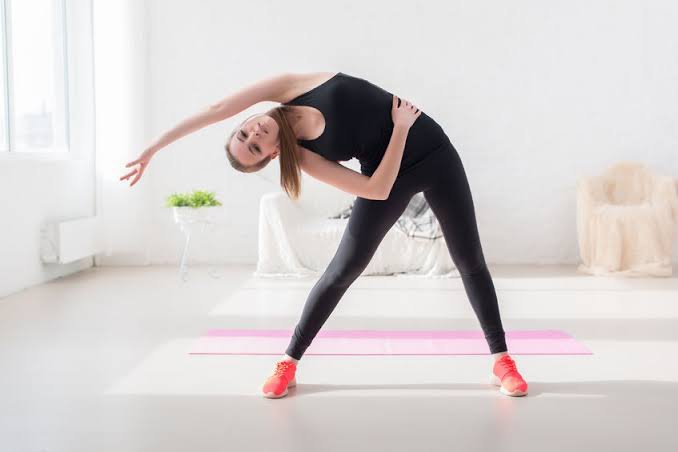
A healthy joint can move through a full range of motion expressing flexibility. Inflexible joints get fatigued easily and birth pain. It is important to indulge in exercises that make your joints and surrounding muscles flexible
“Ouch!!! I am tired, I can’t do this anymore” This is what most people say after a 2-minute workout at the gym or running track, most times, as a result of rigid joints. Rigid joints birth stiffness, pain, immobility, tightened muscles, and fatigue. The list goes on and on, but what could cause your joint to birth and bear the above symptoms? There are a variety of reasons such as; inactivity, lack of exercise, injuries, arthritis, and other age-related illnesses.
What is the way forward? The most significant way forward is the involvement in exercises that promote flexibility.
According to Healthline, Flexibility is defined as the ability of joints and muscles to move through their full range of motions without pain or stiffness. It is the pliability of joints and muscles with no added pain or stiffness. A comparative analysis study proved that it is worthwhile to improve muscle strength and flexibility than muscle power only. With that being said, below are easy exercises to indulge in to gain joint flexibility.
Easy exercises that improves joint flexibility
Most of these exercises do not require equipment, they are easy and effective for joint and overall wellness. They include;
1. Shoulder pass-through
The joint found in the shoulder is the ball and socket joint. This exercise helps improve the flexibility of the chest and shoulders. It is an exercise that should be done especially by those who sit at a desk for long hours. Also, doing this exercise as a warm-up before any workout can help improve your form and prevent muscle stiffness and injury.
Equipment needed for shoulder pass-through: Broomstick or PVC pipe
Muscles worked: chest, rotator cuff, anterior deltoid and upper back
Procedure
- Stand with your feet and shoulder -width holding a broomstick parallel to the floor. Hold the bar as wide as possible with an overhand grip
- Keep your arms straight, and slowly raise the broomstick above your head. Hold your core tight to maintain good balance and posture.
- Hold the broom behind your head for 2 seconds and then start the procedure over again
- Repeat 5 times
2. Ankle mobility
The joint between the lower leg and the foot is known as the ankle. The essence of the ankle mobility exercise is for better performance during workouts like squats and deadlifts. It also enhances better balance and fewer falls during workouts.
Equipment needed: none
Movement: ankle dorsiflexion, plantar flexion
Procedures
- Stand next to a wall
- For support, place one hand on the wall
- Come into a tip-toe position by slowly rocking forward unto your toes.
- Lift your toes off the ground by slowly rocking back into your heels
- Repeat 8-10 times
3. Walking hip opener
The Ball and socket joint is also found in the hip causing it to move in all directions. This exercise will help to warm up the hip joint and muscles before any workout to ensure stability and balance
Equipment needed: none
Muscles worked: hip adductors, hip abductors, glutes, hip extensor
- Stand tall with feet hip-width apart.
- Plant your feet firmly on the ground and lift your left knee to your chest.
- Make a circle with your left knee, bringing it up and across your body and then out to the side and down.
- Place your left foot on the floor and repeat on the right side.
- Repeat 10 times, then repeat the sequence moving your legs in the opposite direction by bringing your leg out to the side first and then across your body
4. Thoracic spine windmills on floor
Your thoracic spine is located in the middle of your back, from the base of your neck to where your ribcage ends. This exercise ensures good mobility in the thoracic spine by allowing you to move your arms freely over your head and turn side by side. Upper back pain, poor posture, and shoulder pain can result from poor mobility
Equipment needed: towel or foam roller
Muscles worked: core muscles, upper back, spine stabilizing muscles, and obliques
- Lie on the floor on your side.
- Bend your knees and hips to just past 90 degrees, resting your knees beside you on the floor.
- Straighten your bottom leg and rest your top leg on a foam roller or a towel without changing its position.
- Extend both your arms together along the floor, straight out in front of your body. They should be stacked, palms together, at shoulder height.
- Slowly lift your top arm and rotate it away from you, opening up your chest to the ceiling. Rotate your head and trunk until your hand is on the other side of your body, if possible.
- Hold this position for 3 seconds and slowly bring it back to touch your other hand.
- Repeat 5 times on each side.
5. Neck half circles
Poor neck movement can lead to pain and problems in the upper back, head, and neck. It is important to indulge in neck mobility as the neck is an important part of the body involved in everyday activities.
Equipment needed: none
Muscles worked: neck flexors and extensors, trapezius
- Sit or stand comfortably with your hands on your lap.
- Tilt your head to one side until you feel a stretch. Slowly roll your head forward to bring your chin to your chest, only going as far as you can without pain.
- Continue to roll your head to the other side until you feel a stretch along the opposite side of your neck.
- Make 3 half circles, moving slowly and smoothly through the motion.
Takeaway
The joint is important for mobility or movement. It is important to pay attention to the joint, especially during exercise to improve flexibility. Exercise to improve joint flexibility can often be done as a warm-up before the main workouts to improve stability and balance— just like taking appetizers before the main course. Exercise that can improve joint flexibility are; shoulder pass-through, ankle mobility, thoracic spine windmill on the floor, walking hip opener, and neck half circles. These exercises are more in dynamic form than static.
References
1. Healthline. 5 joint mobility exercises to improve flexibility and function. https://www.healthline.com/health/fitness-exercise/joint-mobility-exercises
2. Suzuki, Y. et al (2019). Home exercise therapy to improve muscle strength and joint flexibility effectively treats pre-radiographic knee OA in community-dwelling elderly: a randomized controlled trial. Clinical rheumatology, 38(1), 133–141.

 Mkay health blog (HWF analyst)